

Table of Contents

Making a choice among protein powders has been an easy task in the previous decade. If dairy suits you well opt for whey protein, and if you are vegan or lactose intolerant opt for a plant protein like pea protein, soy protein etc.
Our choices when it comes to protein powder should no longer be stuck on this gram per scoop math, rather we should be analysing how your body actually processes that scoop. What does it give you in return? How does it make you feel: after the workout, and throughout your day? How does it support you in your health journey?
One thing more that we should focus on here is that every protein source offers unique advantages, so depending on your goals like if you want to build muscles, improve recovery, or just want to increase your protein intake you can opt for the best choice for you.
Now let’s compare whey vs plant vs yeast protein across the factors that matter most while choosing a protein powder.
Protein Quality: What Actually Matters?
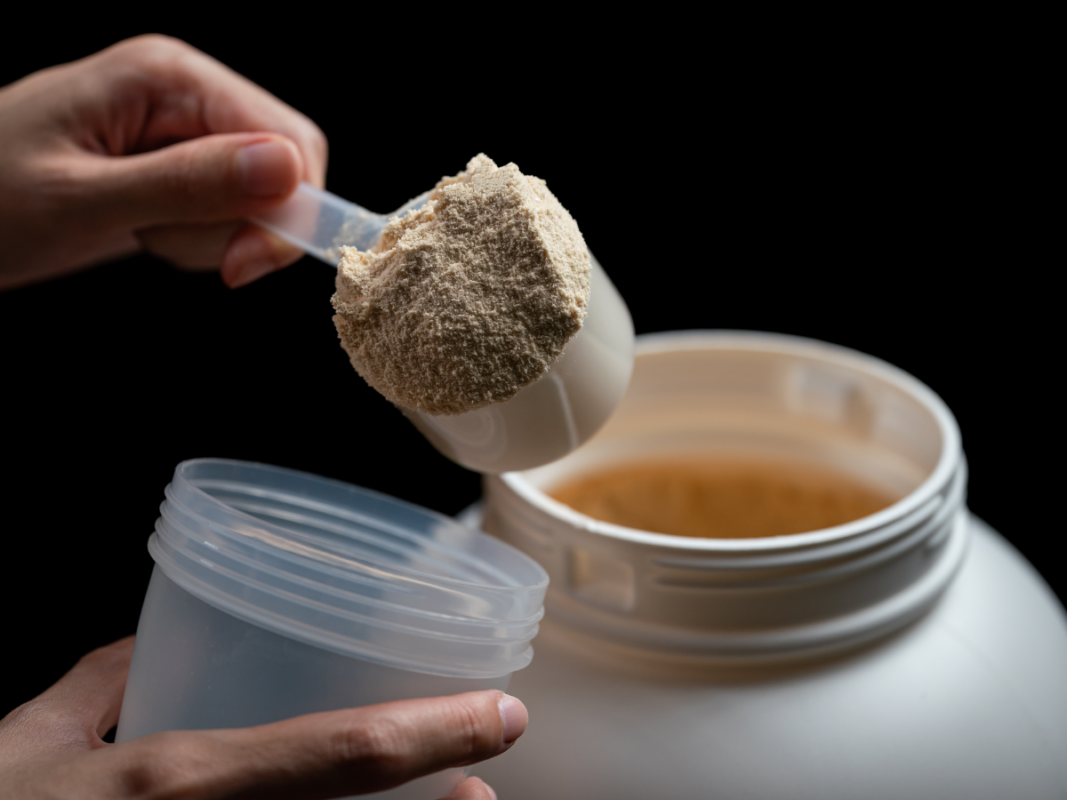
When choosing a protein powder, it is easy to focus just on the grams of protein per serving. But 25 grams of protein from one source might not be the same as 25 grams from another.
A few factors that affect protein quality are:
- Essential amino acid composition
- Leucine content
- Protein digestibility
- Amino acid availability
- Amount consumed in each serving
Here’s where that “27g protein doesn’t mean 27g absorbed” idea from earlier actually gets a number attached to it.
PDCAAS stands for Protein Digestibility-Corrected Amino Acid Score. In simple terms, it answers two things about a protein: does it contain enough of each essential amino acid that your body needs, and how much of that protein does your body actually absorb and use. The maximum score is 1.0.
For better understanding:
- Whey protein and Casein score at or near 1.0
- Yeast protein scores at 1.0
- Soy protein isolate sits close behind, generally in the 0.9–1.0 range
- Pea protein comes in around 0.89
- Rice protein and wheat protein score much lower, often in the 0.4–0.5 range, because they’re short on lysine
This is exactly why blending actually matters for plant proteins. A pea and rice combo, covers for each other’s limiting amino acids and pushes the effective score higher than either would manage alone.
So the honest takeaway: PDCAAS is a useful parameter, but it’s not the whole story. If a label proudly displays a PDCAAS of 1.0, that tells you the protein can meet your amino acid needs, but not that every gram on the nutrition panel is showing up in your muscles as that depends on the digestibility score too.
Yeast protein was compared against whey concentrate, whey isolate, soy, wheat, and pea proteins in a 2025 study. The indispensable-to-dispensable amino acid ratio was discovered to be high in yeast protein. It also had a higher PDCAAS and amino acid score than the studied plant proteins.1
Because it provides us with a more balanced view, that discovery is worth considering. Although yeast protein has a good amino acid profile, whey protein is still superior1
Therefore, it would be more accurate to state that yeast protein has a promising nutritional profile and merits more research rather than stating “yeast protein is better than whey”.
Whey vs Plant vs Yeast Protein: Which One Is Best for Muscle Growth?
The majority of individuals are mostly asking this question.
Of the three, whey currently has the best overall evidence foundation if your goal is to gain or maintain muscles.
Whey is digested quickly and it contains leucine and other essential amino acids in good amounts which is important for promoting muscle growth, along with resistance training.2
A randomized clinical trial, 2015 compared pea protein, whey protein and placebo over 12 weeks of resistance training. The study concluded that pea protein could be an alternative to whey for promoting muscle thickness during resistance training3.
As yeast is the newest addition, the evidence for yeast protein is much more recent. However a 2026 randomized controlled study concluded that yeast protein could be an effective whey alternative to improve the functional status of this population4. The evidence is encouraging, but limited, so further human research is needed in this context.
Which Protein Is Better for Lactose Intolerance?
In this category, the practical decision can be quite straightforward. Whey, which is formed from milk, contains lactose, though the amount varies depending on the product.
Whey protein isolate frequently has less lactose than whey concentrate because of additional processing to remove non-protein components.
If they are lactose intolerant, some people might be able to handle a low-lactose whey isolate, while others might prefer to avoid dairy products completely. Since yeast and plant proteins are naturally dairy-free, they are useful alternatives for people who want to avoid lactose.
However, lactose intolerance and a milk allergy are not the same thing. A person who is allergic to milk proteins should not use a low-lactose whey product.
Which Protein Should You Choose?

There isn’t one protein that works best for everyone.
Select Nutrabay Gold Whey Concentrate Protein or Nutrabay Pure Whey Concentrate if
- You want the protein powder that has a lot of research data backing it
- Recovery and muscle growth are crucial goals for you.
- You have a good tolerance for whey and dairy.
Select Nutrabay Gold Pea Protein or Pure Pea Protein if:
- You are a vegan or lactose intolerant.
- You’re looking for a protein without dairy.
- You favour mixed proteins, rice, soy, or peas.
Select Nutrabay Yeast Protein if
- You’re looking for a protein without dairy with PDCAAS score 1.
- Proteins obtained from fermentation are an area of interest to you.
- You’re looking for a substitute for conventional plant proteins.
- The product offers a suitable profile of proteins and amino acids.
Compared to whey and well-known plant proteins, yeast protein is one of the most intriguing new protein sources, but there is still little human evidence.
The Final Verdict
So, which one wins?
When it comes to the quality and scope of scientific data, Whey continues to lead. It has been thoroughly studied, provides all of the essential amino acids, has a substantial amount of leucine, and digests rapidly.2
Plant protein provides a potent alternative, especially for people following vegan or dairy-free diets. Research shows that plant protein can improve muscle-related outcomes when total protein intake is sufficient, albeit the results may vary depending on the protein source and demographic being studied.5,3
Yeast protein comes next. It is more recent, fascinating, and could be a good alternative source of protein. Research suggests that yeast protein may provide a balanced amino acid profile, and recent human experiments have shown encouraging results. 1,4
But science isn’t far enough to call yeast protein “better than whey” with certainty. Actually, it’s fascinating because of it. As yeast protein provides consumers with an option to attempt to replace whey overnight, particularly those looking for dairy-free and fermentation-derived protein sources.
Ultimately, the best protein for you is one that is compatible with your body, complements your diet, provides a complete high-quality protein, and consistently aids in meeting your nutritional & health goals.
Frequently Asked Questions
Is yeast protein a complete protein?
All of the necessary amino acids can be found in yeast protein. Yeast protein has a favourable amino acid composition consisting of all essential amino acids, making it a complete protein.
Is yeast protein beneficial for building muscle?
For muscle building and growth, regular protein intake is crucial, in which yeast protein can aid well.
Is whey protein superior to plant protein?
Whey protein definitely stands as it contains all essential amino acids and is a complete protein, however the type of plant protein and the quantity in which it is taken will determine the exact answer.
For people with lactose intolerance, which protein powder is ideal?
Yeast and plant proteins are naturally dairy-free and a better choice for people with lactose intolerance too.
- Pubmed.ncbi.nlm.nih.gov. (n.d.-b). https://pubmed.ncbi.nlm.nih.gov/39303477/[↩][↩][↩]
- Pubmed.ncbi.nlm.nih.gov. (n.d.-c). https://pubmed.ncbi.nlm.nih.gov/28642676/[↩][↩]
- Pubmed.ncbi.nlm.nih.gov. (n.d.-d). https://pubmed.ncbi.nlm.nih.gov/25628520/[↩][↩]
- Pubmed.ncbi.nlm.nih.gov. (n.d.-e). https://pubmed.ncbi.nlm.nih.gov/42016236/[↩][↩]
- Lim, M. T., Pan, B. J., Toh, D. W. K., Sutanto, C. N., & Kim, J. E. (2021). Animal Protein versus Plant Protein in Supporting Lean Mass and Muscle Strength: A Systematic Review and Meta-Analysis of Randomized Controlled Trials.Nutrients,13(2), 661. https://doi.org/10.3390/nu13020661[↩]